
Light Loom
White light isn’t just one color. It’s actually a combination of many! The Light Loom helps us explore additive color, which occurs when different wavelengths of light combine to form white. This is different from subtractive color, like mixing paints, where combining colors results in darker tones.
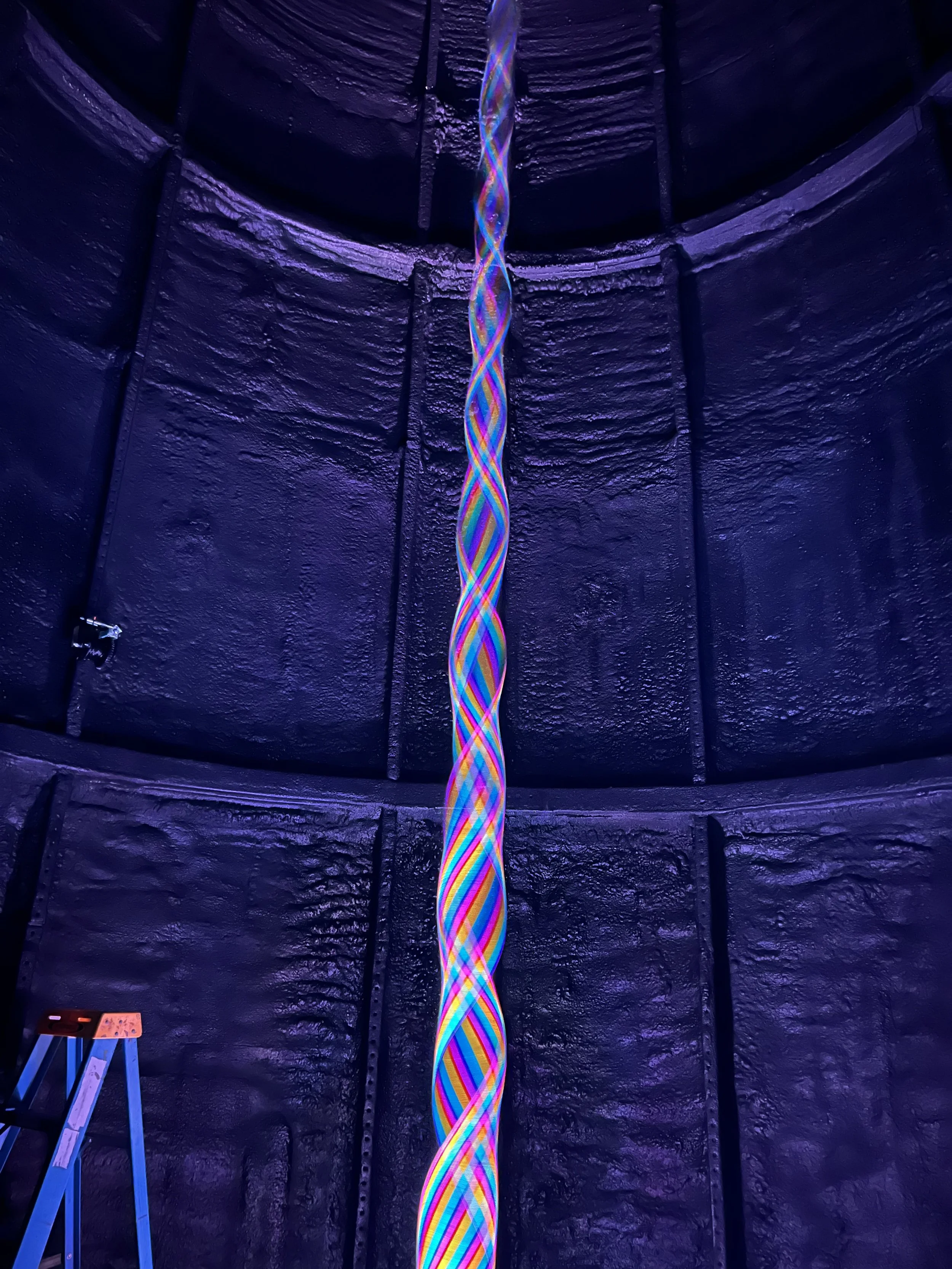
In this exhibit, a suspended cord moves in waves from a motor at the base of the silo. The undulating rope is illuminated by LED light, which when looked at directly, appears white. But when the cord begins to move, something amazing happens. You can see the separate colors that make up the white light. The shifting motion reveals the rainbow hidden within.
Careers
Physicist, Art Director, Lighting Technician, Photonics Engineer
How To
Approach the color mixing panel inside the silo.
Observe the undulating rope.
Wave your hand over the touch-free optical sensors and observe how the colors change.
Challenge
What colors do you see? Can you name them all?
What happens when we mix different colors of light together?
If we mix red, green, and blue light together, what color do we get?
Telar de Luz
La luz blanca no es un solo color, ¡en realidad es una combinación de todos los colores! El Telar de Luz nos ayuda a explorar el color aditivo, que ocurre cuando diferentes longitudes de onda de luz se combinan para formar luz blanca. Esto es diferente del color sustractivo, como cuando se mezclan pinturas y los colores combinados resultan en tonos más oscuros.
En esta exhibición, una cuerda suspendida se mueve en ondas gracias a un motor en la base del silo. La cuerda ondulante está iluminada por luz LED, que al mirarse directamente, parece blanca. Pero cuando la cuerda comienza a moverse, sucede algo sorprendente: puedes ver los colores individuales que forman la luz blanca. El movimiento revela el arcoíris oculto dentro de la luz.
Profesión
Físico/a, director/a de arte, técnico/a de iluminación, ingeniero/a en fotónica
¿Cómo hacerlo?
Acércate al panel de mezcla de colores dentro del silo.
Observa la cuerda ondulante.
Mueve la mano sobre los sensores ópticos sin contacto y observa cómo cambian los colores.
Desafío
¿Puedes hacer que los colores se vean con más claridad ajustando la velocidad o dirección del movimiento?
¿Qué colores puedes ver? ¿Puedes nombrarlos todos?
Prueba cambiar tu posición alrededor de la cuerda. ¿Tu perspectiva cambia lo que ves?
MORE EXHIBITS…

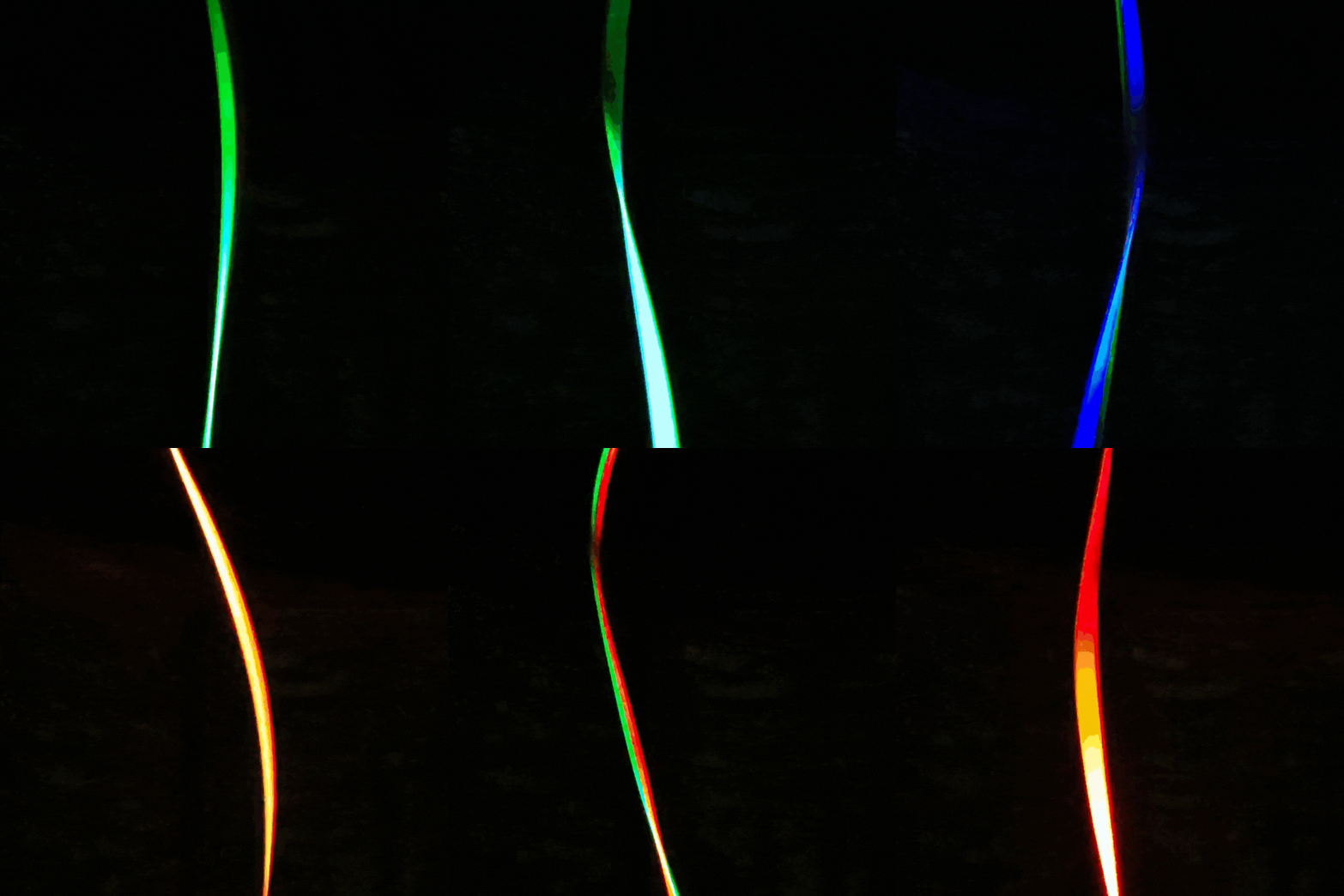
A white rope is suspended from a mounting point at the top of the Science Mill Silo. The bottom of this rope is attached to a motor mounted to the oor of the Silo. The motor churns the rope, sending waves of motion up and down its length. The undulating rope is illuminated by LED light. Looked at directly, this LED light appears white. However, the motion of the rope reveals that this white light is created by mixing various different colors of light together. Children engage the installation through a control interface made of touch-free optical sensors. Each sensor represents a different wavelength of visible light. These sensors control the LED color input being shone through the sculpture, resulting in different Additive Color combinations. A display near the control interface reveals the numerical values of the color wavelenght being displayed.


Try to spot the shy crabs that thrive in this mini ecosystem, alongside tropical fish and plants.
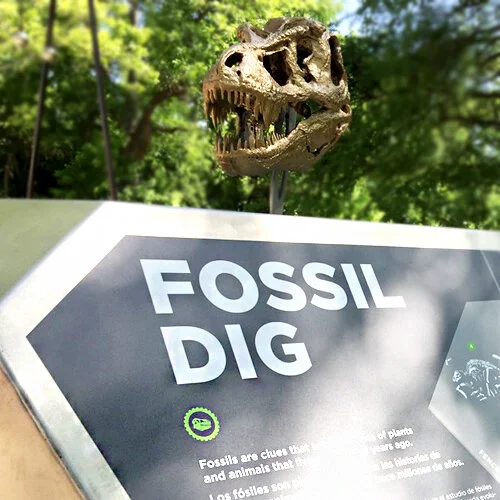
Fossils are clues that tell the stories of plants
and animals that lived millions of years ago.
Paleontology is the study of fossils and
seeks to map out how life evolved over
geologic time. Using clues from biology,
biochemistry, geology, mathematics and
engineering, paleontologists construct ideas
of how animals looked, behaved, interacted
and died.
Step into the Fossil Dig, grab some
excavating tools and use the skills of a
paleontologists to unearth the unique stories
of these amazing creatures! How many
fossils can you find in the Fossil Dig?

Step inside the silo to see your phone’s invisible radio waves become a dazzling light show.


The Colossal Robotic Hand is quite a sight: a 30-foot-tall, stainless steel robotic hand constructed from more than 500 individual, custom designed, stainless steel triangles. It is impressive in a stationary position, but with a remote joystick mimicking the robot hand, visitors can easily operate the Hand, making each of its giant fingers move, much like their own. This exhibit, in our Science & Art Park, is a powerful, interactive icon of creativity, engineering, and design.

What looks like space broccoli and can go on forever? It’s art that’s actually a math equation!

Soak up soundwaves and reveal a colorful surprise inside this exhibit by artist McKay Otto.

Step up to the control table and accept the challenge to manage the supply of electricity across homes and businesses in a virtual town. This interactive game will keep you on the move with quick thinking while teaching you the pros and cons of energy resources such as coal, natural gas, wind, nuclear, and solar power. Slide the levers and rotate the dials as you experience firsthand how our power grids, along with a variety of energy inputs, are used to supply electricity across the nation.
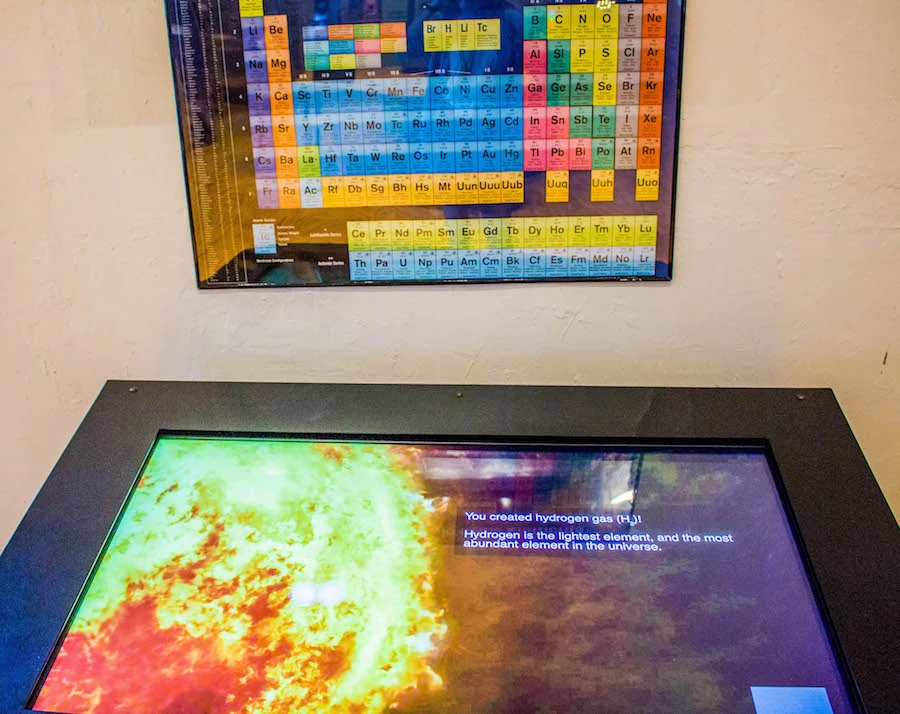
Play and experiment with tiny building blocks of life by mixing atomic combinations of carbon, hydrogen, nitrogen, oxygen, phosphorous, fluorine and chlorine. Enjoy the surprises as you create a variety of molecules found in nature and see their animations unfold on screen. Your chemistry concoction could do anything from allowing us to breathe to creating an explosion!

A visit to this exhibit allows you to interact with the human body like never before. The Virtual Human Body is a unique tool that allows people to explore different structures of the body. Using hand gestures and a 60-inch touchscreen display, viewers can swipe, zoom and slice the images to gain a deeper understanding of the functions and processes inside the human body. The visuals on display were collected using computerized tomography (also known as CT) scan technology that captures a series of image ‘slices’ to create the overall 3D image.