It’s Outdoor Science Season! Fall activities in Johnson City

It’s Outdoor Science Season!
Fall activities in Johnson City

Fall’s blue skies and mild temps have finally arrived, so we’re making the most of time outdoors with family. Here are some of our favorite ways to explore at the Science Mill and the surrounding Johnson City area!

This fall, trade your backyard for ours

The Science & Art Park—the Science Mill’s big backyard—has over a dozen outdoor experiments and science experiences your group will love. Celebrate a special day or make it your outdoor classroom, like this group did:

(Courtesy Growing Up Childcare)

(Courtesy Growing Up Childcare)

“As we sat down for lunch, the sun welcomed us. We were finally exploring in a space that wasn't home or a hiking trail. As we sat down near an enormous robotic hand overlooking a fossil dig site, the kiddos reminded me of how school-like it all was. We snickered over failed field trips and were reminded of all the friends we missed!! The Science Mill did a fantastic job ensuring our safety while inside the building and out. They were prepared and ready to over compensate for all our mask malfunctions! Many thanks for all the fun!! We're excited to come back.”
– Growing Up Childcare, via Facebook 

Helpful tips for your Science & Art Park visit:

  • Bring a picnic or enjoy farm-to-table take-out from our neighbor, Lady Bird Lane Café (Wed-Sat 10:30am-2:30pm). We have outdoor tables available for lunch or a snack. 

  • The Butterfly Garden, pecan grove and creek are prime spots for spying local wildlife. Download an app like iNaturalist or Seek to help identify your finds.

  • Speaking of “I Spy”—look for Scavenger Hunt signs sprinkled throughout the Science & Art Park. Can you solve all 10 clues?

  • Plan ahead for group discounts and special programs! Groups of 15 or more who pre-register at least 2 weeks before their visit get a discounted rate of $8 per person. Homeschool and learning pod groups can also add a staff-led Learning Lab. Click for more details and to start your registration.

Our visit guide has more resources for planning your day, including “play safe” options like our hands-free experiences—several of which can be found in the Science & Art Park, along with the Mill’s signature hands-on exhibits:

Minds-on, Hands-free favorites:

IMG_5344.JPG
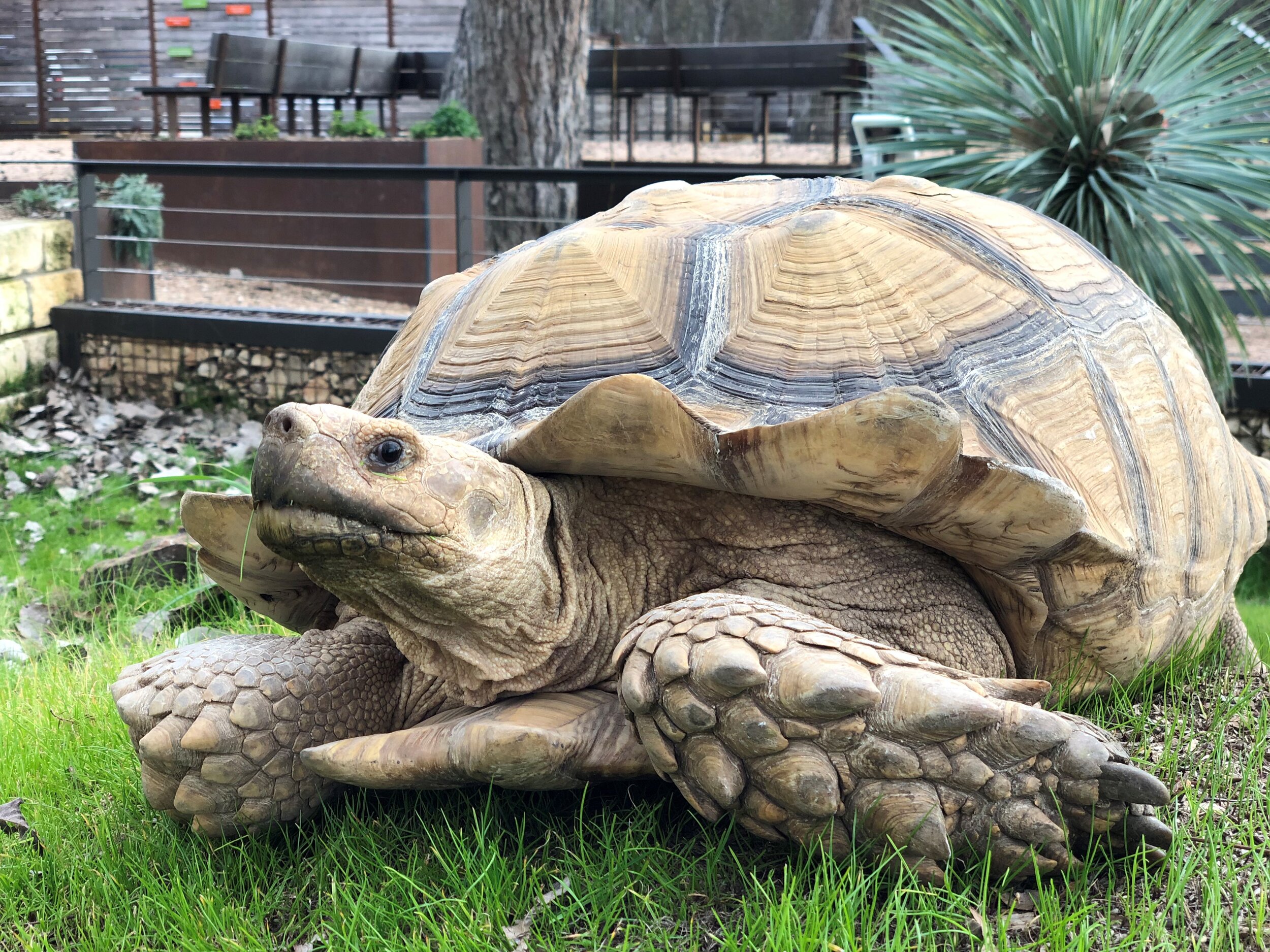
African Spurred Tortoise

African Spurred Tortoise

Incredible Ball Machine

Incredible Ball Machine

Butterfly Garden

Butterfly Garden

Labyrinth

Labyrinth

Hands-on Highlights:

Remarkable Reflectors (NEW)

Remarkable Reflectors (NEW)

Colossal Robotic Hand

Colossal Robotic Hand

Giant Bubbles Station

Giant Bubbles Station

Fossil Dig

Fossil Dig

Johnson City’s fall attractions & Halloween events

October and November are the Hill Country’s “second spring,” with fall wildflower blooms that attract a host of local and migratory butterflies and other pollinators. Prairie land, restored to its wild beauty, blooms along the Settlement Trail at Lyndon B. Johnson National Historical Park. Make the short trek (<1 mile) at this neighboring attraction before or after your Science Mill adventure.

A fall calf recently born at LBJ Ranch (Courtesy&nbsp;of National Park Services)

A fall calf recently born at LBJ Ranch
(Courtesy of National Park Services)

For some of the area’s best fall colors, travel 14 miles west from the Science Mill to LBJ Ranch. As you take the driving tour or bike the road through the Ranch, spot vivid leaves on oaks, sumacs and possum-haw hollies and scan the pastures for the “nursery herd” with newborn fall calves! Restrooms in Hangar Visitor Center are open for those that need a pit stop. Check online to confirm current hours.


Johnson City is also circled by a remarkable ring of state parks, including Pedernales Falls State Park, Blanco State Park, Lyndon B. Johnson State Park, Old Tunnel State Park, and Enchanted Rock State Natural Area. Most are a 20-minute drive from the Science Mill; Enchanted Rock is just under an hour away and well worth the trip. Many parks currently require day passes, so be sure to plan ahead at Texas Parks and Wildlife.

A Black Swallowtail visits a Shrubby Boneset (Courtesy of Enchanted Rock State Natural Area)

A Black Swallowtail visits a Shrubby Boneset
(Courtesy of Enchanted Rock State Natural Area)

Zebra crossing at Exotic Restort Zoo (Courtesy of Exotic Resort Zoo)

Zebra crossing at Exotic Restort Zoo
(Courtesy of Exotic Resort Zoo)

And if really wild critters are your thing—think camels, ostriches and zebras!—take a drive-thru safari at Johnson City’s Exotic Resort Zoo. They recently relaunched their guided tours and petting zoo on weekdays (weekends and holidays excluded).

We’d love to see how you celebrate outdoor science season! Share photos from your favorite fall destinations and tag the Science Mill on Facebook, Instagram or Twitter

What is the future of science?

What is the future of science?

Insights from my interviews with leading scientists and visionaries

Holly Barton, Director of Strategic Alignment

I have a fun job. As a staff member at the Science Mill, “work” includes lots of surprises. After all, this is a place where my colleagues drop parachutes designed by kids from the tops of towering silos, to see which can safely cradle an egg. And build a 30-foot steel hand with moving fingers because…well, why not?!

As we prepare for the Science Mill’s 6th Annual Benefit, Navigating the In-Between: The Future of Science, my “work” has been the unique privilege of speaking with 11 amazing scientists, artists and visionaries (oh, and one MacArthur Fellow!). In watching their short presentations recorded exclusively for the Science Mill, here’s what I learned about the future of science:

stepka 2.png

Coding, programming and data analysis skills are key

Not all scientists wear a white coat, hold a beaker and work in a lab! This theme echoed loudly across fields—from neuroscience to astrophysics to biomedical engineering to virology. Kids who want to pursue a STEM career need to be skilled in coding, programming, data analysis and statistics. In his talk about artificial intelligence, Matthew Stepka acknowledges that, while we may be on the edge of Moore’s Law, the amount of new scientific data being collected is massive—there’s so much waiting to be analyzed and understood.

snell-rood.png

Collaboration between disciplines is the future

A number of scientists discussed the need for “cross talk” between areas of science, design, technology and art to propel innovation. What if, as Dr. Emilie Snell-Rood proposes, we took biology’s basic body of knowledge across millions of species and applied that knowledge to solve problems? Perhaps a solution comes from making a robot with gecko feet, or studying caterpillars’ adaptations to toxins to create new cancer medications. Technology now provides opportunities for innovators to collaborate on a global scale. It’s an exciting time to be scientist!

tilman.png

Diversity matters

Dr. G. David Tilman
describes how, in an experiment with 170 plots of prairie land, research shows that the greater the number of species, the greater the ecosystem’s productivity and stability. Just as diversity matters in nature, diversity in education and the workforce matters, too. Many of the scientists shared how having diverse voices at the table improves the efficiency and quality of scientific research. 

Yet too many voices remain absent or silenced. Dr. Snell-Rood shares a study showing empirical proof that demographically underrepresented students innovate at a higher rate than majority students, but their contributions are discounted and less likely to earn them academic advancements. 

orr.png

Susan Orr illustrates the “funnel effect” in engineering: over the course of college and into the workforce, women’s representation in the field gradually—but significantly—drops. To understand why, she interviewed 350 female STEM professionals to uncover barriers to gender diversity in the workplace. Her talk lays out seven key issues, several of which impact men, too.

We must continue to support underrepresented students, including minorities, first-generation students, and girls, in their pursuit of a STEM career. Which leads to our final point: 

hawkins.png

We need to nurture kids’ interest in STEM

Some of these scientists knew from an early age exactly what they wanted to pursue as a career. (Be sure to listen to Dr. Keith Hawkins’s talk to hear how a crush on a girl in elementary school led him to astrophysics!) One constant in finding their paths was the encouragement of parents, teachers or professors. We know that not all students have that support in their lives. How can we, as a community, help support these students, who are often the diverse voices that science needs? One area discussed was financial support, such as sponsoring paid research positions, so students don’t need to choose between summer jobs and unpaid internships. Here at the Science Mill, that support starts with STEM Career Immersion Camps that introduce students to a world of future possibilities.

Ten-year predictions: The Future of Science 

I couldn’t resist asking our experts for a few specific predictions about the next decade:

henricks.png
  • According to astronaut Tom Henricks, NASA will put a woman on the moon within five years. Within 10 years, humans will walk on Mars!

  • Dr. Hawkins predicts that the Gaia spacecraft, also known as the Billion Star Surveyor, will provide the most precise 3D star map of the galaxy ever attempted—mapping about 1 billion stars (or 1% of our galaxy) at a cost of €1 billion.

  • Matthew Stepka expects superhuman capabilities from computers and machine learning that will make a real impact on our everyday lives (beyond facial recognition and translation, for example).

  • Dr. Mark Thomas is already exploring optogenetics, or the use of light to activate or inactivate specific pathways in the brain. This cutting-edge technology will be expanded in the next decade to make advances in treating addiction.

Should we hold our scientists to these predictions? No flying cars, so I’d say it’s safe to check in again in 10 years. Until then, I’d like to leave you with my two favorite quotes from the talks:

villareal.png

“Void the warranty. Bust things open and figure out how they work.” – Leo Villareal, Artist

“There is only one answer: it’s science!” – Vincent Racaniello, Virologist

I hope you’ll take the opportunity to watch one or all of these enlightening talks during this special event and learn how you can help support the next generation in the Future of Science.

Minds-On Family Fun! A Day Trip to Johnson City

With plenty of things to see and do, Johnson City is a great place for a Texas Hill Country day trip with activities that appeal to the whole family, including science, history, outdoor adventure, food and much more. We’ve listed some of our favorite activities and stops, with plenty of space to safely explore and enjoy!

photo_20191119104320_6554205_0.png
sm_drone_chamber.png

 You can start or end your day here at the Science Mill, a historic 1880s mill creatively reimagined into a bright and airy science museum with 50+ innovative outdoor and indoor experiences! The Science Mill is now open four days a week, with two entry times (10am-1pm and 2pm-5pm) Thursday through Saturday, and from 12-4pm on Sunday.

bubbles_02.jpg

We’ve created a guide for different ways people can “play safe” and experience our interactive exhibits. Choose an outside-only, touch-free, or hands-on (with a safety focus) experience. Our newest exhibits in the expansive outdoor Science & Art Park include the Labyrinth, Butterfly Garden, Giant Bubbles Station and Scavenger Hunt. Learn more about the Science Mill’s fun and safe STEM (science, technology, engineering and math) experiences that will keep young minds engaged.

_DSC0462.jpg

The Science Mill has plenty of outdoor space and tables for picnics, so feel free to bring your own, or stop by one of many local restaurants that are open for take-out and curbside pickup, including Pecan Street Brewing, Fat Boy Burgers, Hye Market food truck at the new Johnson City Coffee Co., East Main Grill, and El Agave, to name a few. Visitors are encouraged to plan ahead and verify hours and information with individual businesses. 

lbj_historic_park.jpg

Want to stretch your legs? Adjacent to the Science Mill is the Settlement Trail to the Lyndon B. Johnson National Historical Park. This easy, round-trip trail is less than a mile long, and visitors can experience some of the historic landscape in the restored prairie and see the log cabin that was home to LBJ’s grandparents from 1866 to 1871. The interpretive exhibits are currently closed, but bathrooms at the event center are open for public use.

settlement (1).jpg

Just a block to the north of the Science Mill you can walk around the outside of President Johnson’s Boyhood Home, to which his family moved from their farm near Stonewall in 1913. Head 14 miles west of Johnson City to explore the wide-open LBJ Ranch, which is currently open for self-guided driving tours. Visitors can tour at their own pace with the ability to stop (outside) at sites along the way, such as the President's birthplace where he was born in 1908, the Johnson family cemetery, and the Johnson's ranch house, known as the Texas White House. The bathrooms behind the President’s birthplace are open. Bikes are also welcome on all or part of the route, which is a five-mile round-trip in length.

IMG_6094 (1).JPG
IMG_6093 (1).JPG

If you loved the critters at the Science Mill, including the adult and baby African Spurred tortoises, axolotls, and more, check out the Exotic Resort Zoo, just north of Johnson City, where you can take a drive-through tour and see antelope, gazelles, deer, emu, sheep, camels, yaks, llamas and more.

Peach season hits its peak in the Hill Country during the summer, and there are plenty of roadside stands where you can purchase these sun-kissed wonders. Check local listings here

Several state parks are within an easy drive from Johnson City, including Pedernales Falls State Park, Blanco State Park, Lyndon B. Johnson State Park, Old Tunnel State Park, and Enchanted Rock State Natural Area. Check with Texas Parks and Wildlife for the latest on day passes and entry guidelines. Outdoor adventure experts at the Expedition School offer paddleboarding, kayaking and canoeing in the Pedernales River Nature Park on Saturdays and Sundays.  

echo.jpg

The Johnson City art scene has blossomed in recent years, and some galleries are currently open by appointment. You’ll also find other shops and restaurants open and eager for visitors. 

So much to do, and we haven’t even touched on all the options in nearby Fredericksburg, Blanco, Marble Falls/Lake LBJ, Dripping Springs, Burnet, Kerrville, Spring Branch or Boerne! If you can’t fit in everything and want to turn your day trip into a staycation, check out lodging, RV and camping options near Johnson City here

We’d love to hear about your Hill Country day trip or your visit to the Science Mill! Let us know your favorite spots, and tag us on Facebook, Instagram or Twitter.  

Tortoise, turtle or sea turtle – what is the difference?

With the opening of SciDive, we have sea turtles on the brain! Our staff biologist, Lisa Keys, shared some facts to help explain the differences among sea turtles, turtles and the Science Mill’s African spurred tortoises.


seaturtle.jpg
speedy.jpg
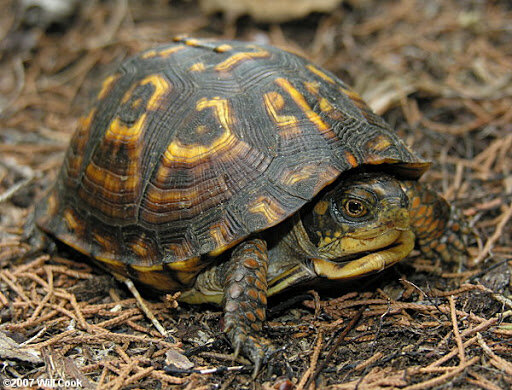
box_turtle.jpg

Trick question?

Surprise, they’re ALL turtles! That is, technically speaking. Scientists group species into categories based on shared features. The group Testudines includes species whose bodies are surrounded by shells that are fused with their ribs and vertebrae. “Turtle” refers to all species in that group – including tortoises and sea turtles.  

Still, important differences set tortoises, turtles and sea turtles apart. These aren’t hard-and-fast rules, but looking for a combination of these traits will help you start to identify who’s who. 

Home, sweet home

Typically, tortoises live entirely on land, while sea turtles live entirely in the water – they only come on land to lay eggs. Turtles spend time in the water and on land. There are, however, exceptions. For example, box turtles spend their lives on land.

turtle_egg.jpg

Shell shapes

Tortoises have high, dome-shaped shells, while turtles and sea turtles have flatter, more streamlined shells for moving through water. But, again, there are exceptions! The pancake tortoise, as its name suggests, has a flattened shell. It hides out in the narrow crevices between rocks.

dome_tortoise.jpg

A sea turtle’s teardrop-shaped body also makes it easier to glide and dive. It’s awesome for swimming, but has a limitation: sea turtles can’t tuck their heads and limbs into their shells for protection. When a predator is near, sea turtles instead swim sideways to make themselves look bigger – too big to swallow!


Look to the feet

Tortoises have stumpy, flat-bottomed “elephant feet” for walking on land, with strong nails for digging. They tend to move slooooowly. Turtles have webbed toes for paddling through the water and can be surprisingly speedy on land. Sea turtles have fused-together toes that form flippers. They hold the title for fastest-swimming reptiles.


feet_tortoise.jpg
tortoise_6.jpg

What’s for lunch?

Tortoises love their veggies; as a rule, they eat only plants. Turtles eat a variety of plants and animals, although some species eat only animals – feasting on insects, fish, crustaceans and sometimes even mammals. Most sea turtles eat animals or a mix of plants and animals, such as fish, seaweed and crabs. But a few species have special diets. Adult green sea turtles eat only plants, like seagrass and algae. Hawksbill sea turtles munch mainly on sea sponges. Leatherback sea turtles are “gelatinivores”: they eat only jellyfish, sea squirts and other Jello-like invertebrates. 

Speaking of lunch: You can meet the Science Mill’s African spurred tortoises at weekend feedings! Public feedings are scheduled for most Saturdays and Sundays at 2:15pm; check with the front desk or call 844-263-6405 to confirm. For an extra serving of adorable, watch the baby tortoise hatchlings on the live Tortoise Cam.

Explore as a sea turtle!

Sequence 01.00_00_49_02.Still001.jpg

Now that we know a little more about tortoises, turtles and sea turtles, it’s time for a deeper dive: become a sea turtle with SciDive, our new 4D virtual reality experience! Swim along a digital coral reef and meet a fellow sea turtle, who acts as your guide. SciDive is a not-to-be-missed experience that ages 8 to 108 will enjoy. (Kids must have an arm span of at least 48”, or their parents’ assistance, to ride SciDive.) Limited spots are available for SciDive each day, so be sure to reserve your spot online before you visit. 


How can I help turtles, tortoises and sea turtles?

Watch out for turtles and tortoises crossing the road. When roads cut through habitats, they may need to reach a pond or find a safe place to lay eggs on the other side. If you see one crossing and it’s safe to do so, you can even help. Follow the turtle’s lead: don’t turn it in a new direction or move it to a spot you think looks more ideal. That can be disorienting and could put the animal in harm. Instead, help it safely reach the side in the direction it was moving.

Big picture, reducing the amount of plastic we use and finding responsible ways to recycle it also helps – sea turtles often mistake plastic pollution for food or get tangled up. Together, we can help keep our oceans clean and sea turtles safe and healthy.

Buy Admission Tickets