2019 Highlights (+ 2020 Sneak Peeks)

2019-highlights-header.jpg

2019 brought exciting changes at the Science Mill, including a new gallery, new exhibits, and new events. Our staff has grown and so has the scope of our programs, bringing hands-on science to communities throughout Texas. With our 5th birthday coming up in February, we’ve been thinking about how far the Science Mill has come (over 200,000 visitors welcomed!) and where we’re headed next.

Here's a look back at 2019, along with a few previews of what’s planned for 2020. Thank you for being part of this year of discovery!

January

SnowDay.gif

Snow Day kicked off 2019 with snowball slingshots, a snowball-swatting robot and more than 1,600 visitors. Snow Day returns January 18, 2020 with even more snow (over 30 tons!), music, live ice sculpture carving, and more!

February

55c20004-cdce-4d8d-a5cc-6bdacf71d236.jpg

The 1,000 square-foot Aquaponics Greenhouse had its grand opening in February. In this unique experience, visitors get an up-close look at tilapia, prawns, and koi that provide the food to grow fruit, vegetables and tropical plants in vertical growing tubes, floating rafts and a giant living wall. Ours is one of a kind, but you can DIY an aquaponic garden at home. Funding generously provided by the Elizabeth & Floyd McGown Charitable Fund.

Spring

2019_highlights_gif.gif

2019 brought new and not-to-be-missed events: releasing butterflies at Butterfly Bonanza; touching and even tasting bugs at Incredible Insects; mixing sci-fi and high-flying tech at Drones and Droids, and the return of SHARK WEEK! Stayed tuned for more exciting events to come in 2020!

 
stemscholar_gif.gif

Congrats to the first class of STEM Scholars, who graduated in May! STEM Scholars participated in nine months of Homeschool Days, exploring topics from augmented reality to Oobleck.

Summer

camp_2019_highlight.gif

STEM Summer Camps grew in 2019, with 27 camps across central and south Texas. Campers used STEM skills in two action-packed camps to survive a post-apocalyptic world and tap into their inner secret agent to design and create techy gadget to complete a secret mission.

african-spurred-tortoise-geochelone-sulcata-white-backgrou-isolated-background-56866436.jpg

Happy birthday, African Spurred tortoise hatchings! We asked you to help name the new arrivals and, after a close vote, we’re delighted to introduce Tortellini, Shelldon and Yasil.

October

scienceoutside_gif.gif

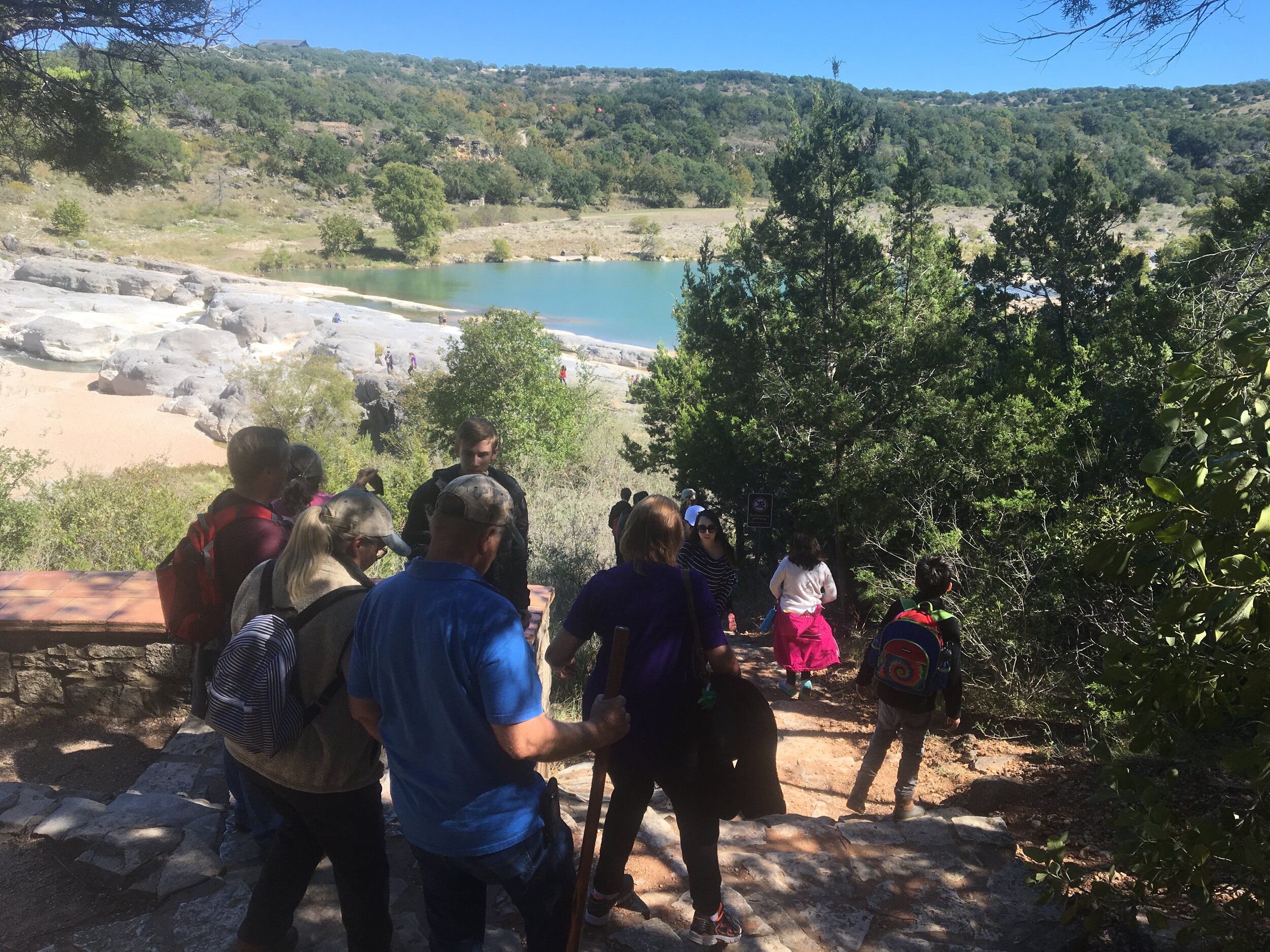
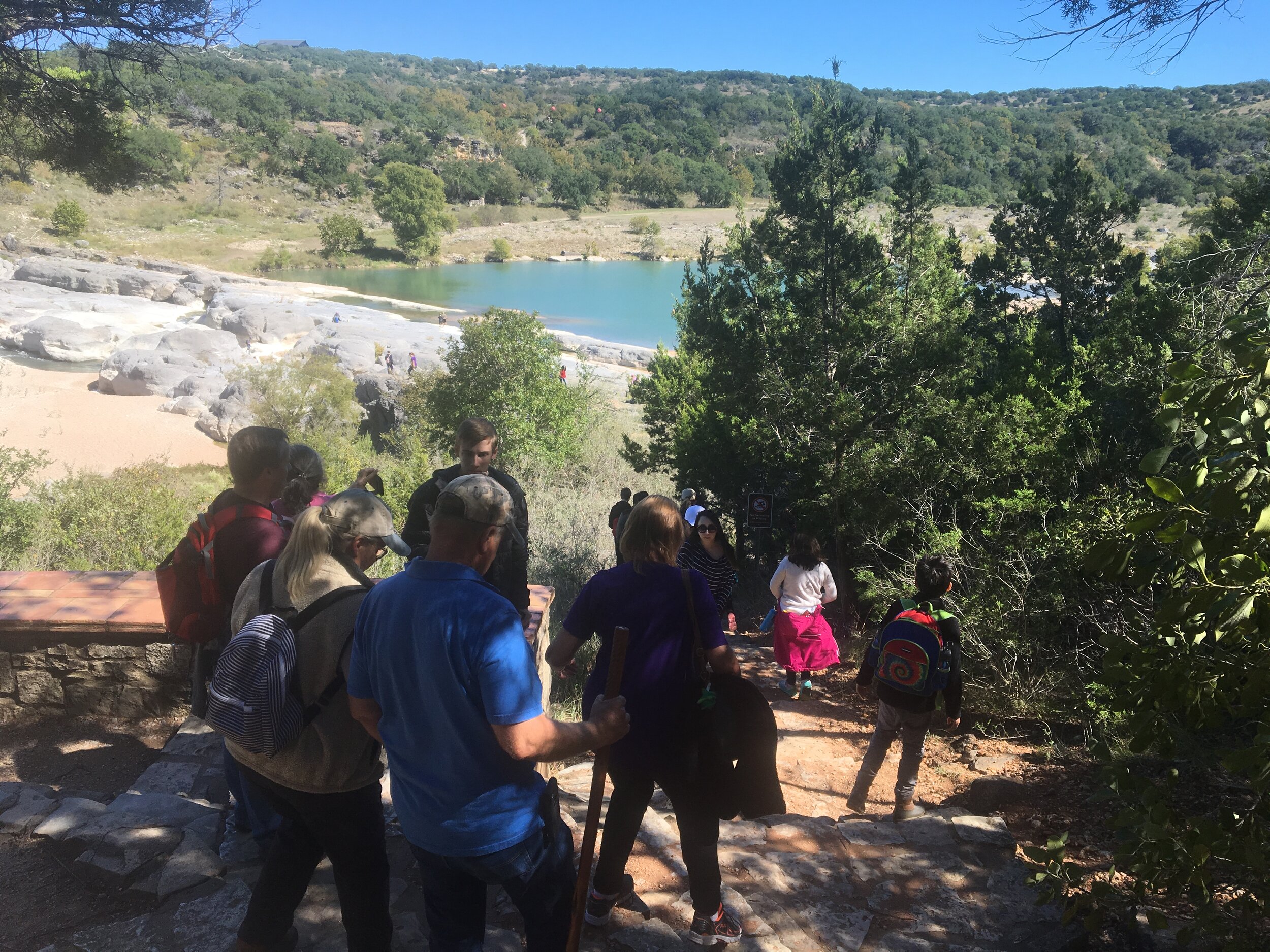
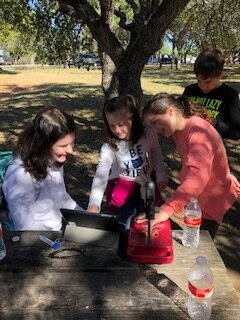
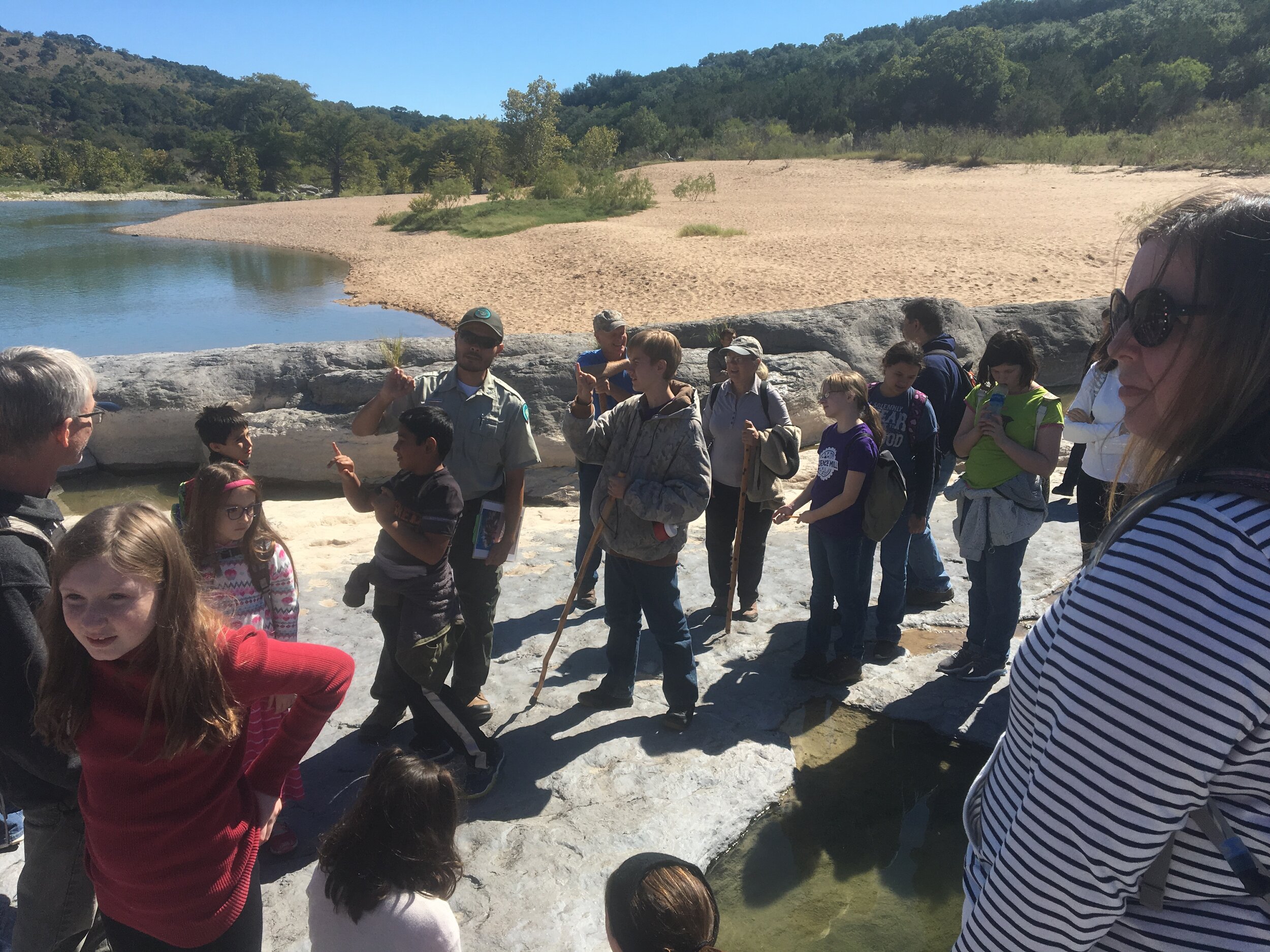
Science Outside capped its first year with a family workshop at Pedernales Falls State Park, connecting 4th-7th graders with tech tools to conduct experiments in nature. (Registration for 2020 coming soon!)

November

waving_arm.gif

We hosted our biggest bash yet at the Night of 5s Benefit, celebrating the Mill’s first 5 years and our vision for the next 5 years including new exhibits, site development, and STEM summer camp expansion. All proceeds directly supported Science Mill programs.

December

MOd_gif.gif

Masters of Disguise opened in December, with live animals and digital games that highlight amazing adaptations used to blend in, stand out and hide in plain sight. Catch it for a limited time in 2020!

81099536_3390211817717383_6622289200437788672_o.jpg

Cue the confetti cannons! On December 22, 2019 the Science Mill welcomed its 200,000th (and 200,001st) visitor!

And some bonus news we received at the close of 2019:

The Science Mill is newly accredited by TEA to provide Continuing Professional Education trainings. Workshops will equip educators to ignite students’ curiosity and aid their exploration of STEM careers.

Meet the Masters of Disguise

_DSC0061.jpg

Meet the Masters of Disguise, the Science Mill’s newest exhibit opening December 21. Bringing together live animals and STEM interactives, this temporary exhibit invites you to take a closer look at the ways that animals blend in, stand out, confuse the eye or hide in plain sight.


“Camouflage comes in many forms, but they are all about survival,” explained Zac Zamora, Science Mill Creative Director. “Animals need to avoid predators, secure food and attract a mate. Features that help them survive get passed onto future generations.” A visit to the Science Mill’s axolotls illustrates this idea. “Compare an albino axolotl with its darker tank mate,” suggests Lisa Keys, Science Mill Animal and Plant Care Technician. “While they’re bred as popular pets, it is unusual to see an albino axolotl in the wild—they rarely survive.”

vietnamese-mossy-frog.jpg
_DSC0047.jpg

Extreme adaptations allow animals to masquerade as other objects in their environments. Covered in lumpy growths, a Vietnamese mossy frog hopes that predators will overlook it as just another clump of moss. Similarly, a giant African stick mantis “becomes” a branch by stretching out its twig-like limbs. The jeweled flower mantis uses this strategy to hunt: unsuspecting insects that wander near are suddenly snatched up by a hungry “leaf.”

For animals who rely on blending in, movement can blow their cover. “Mantids and chameleons disguise their movements, too,” Lisa observed. “They will rock back and forth in the middle of each step to match the swaying leaves around them.”

Scientists think some patterns help to camouflage animals in motion. On the run, a zebra’s stripes may confuse a predator and make it harder to track its path. High-contrast patterns, like black and white, visually break up an animal’s shape. “Militaries borrowed this idea during WWI,” Zac noted. “Ships were painted with ‘dazzle’ patterns to make it harder to gauge their speed and direction for planning an attack.”


To test theories about stripes, scientists in England created a video game. Instead of lions and zebras, humans try to capture “dazzlebugs” with varied patterns. You can try out the Dazzlebug game at the Science Mill; each round you play adds new data on which patterns are hardest to catch.


photodune-rsuOx6xp-redblack-milk-snake-isolated-on-white-background-xl.jpg

The Sinaloan milk snake’s stripes may “dazzle” predators while it slithers away to safety. But as you’ll see in the exhibit, those bold stripes definitely don’t blend in—and that is the point. The brightly colored stripes allow it to impersonate the highly venomous coral snake. “Red, yellow, black and white are warning colors in nature,” said Lisa. “It’s a way to advertise that you are dangerous, so would-be predators stay clear.” In the case of the harmless milk snake, it’s false but effective advertising.

_DSC0008.jpg

Color-changing chameleons have become synonymous with blending in, but their colors are really about being seen. Panther chameleons use color to communicate: to signal danger, to attract (or reject) a mate and even to battle for turf. Male panther chameleons put on a bright display when they fight; the loser goes dark to say, “I give up!”

The secret to the chameleon’s color change lies in a layer of cells that contain tiny crystals. As a chameleon’s skin relaxes and tenses, these cells bunch together or spread out, causing the crystals to reflect light as different colors. Some octopuses and cuttlefish add another trick: along with light-reflecting cells, a web of muscle fibers lets them change their skin’s texture.


Studying how animals produce these dramatic changes inspires scientists and engineers. In the Masters of Disguise exhibit, you can try out panels that change color in response to temperature. A network of nanocrystals, similar to a chameleon’s cells, reflect different colors as they shift from a solid to a liquid and back. It’s a technology used in digital screens. Other materials are still in the experimental phase, such as shape-shifting silicone sheets and panels that automatically change patterns by sensing their environment. “Creating an artificial octopus skin would be an amazing feat,” mused Zac. “It’s a step closer to a real-life invisibility cloak!”

Masters of Disguise will only be at the Science Mill for a limited time, so plan your visit soon! 

Fall Highlight: Family fun at Pedernales Falls

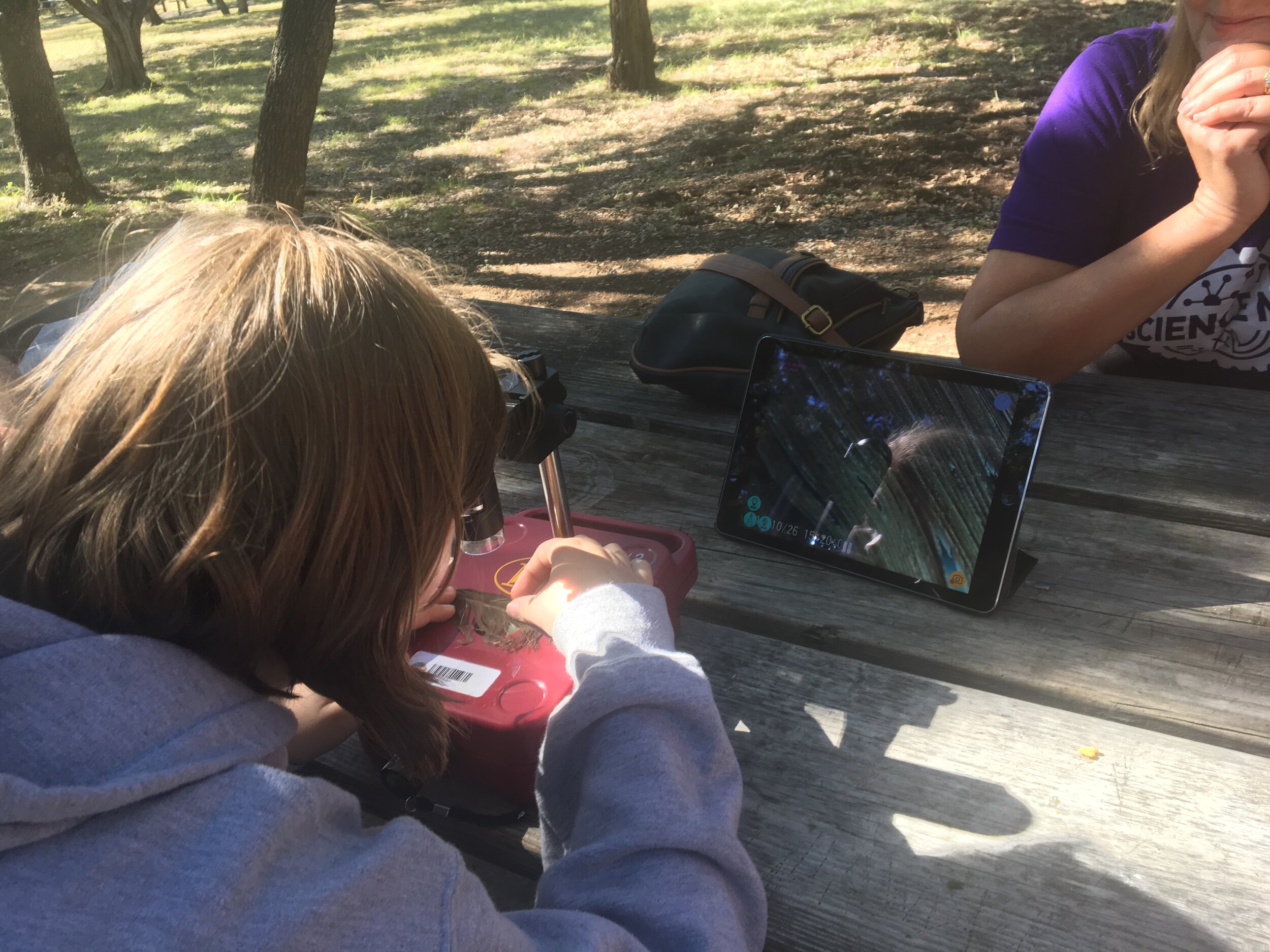
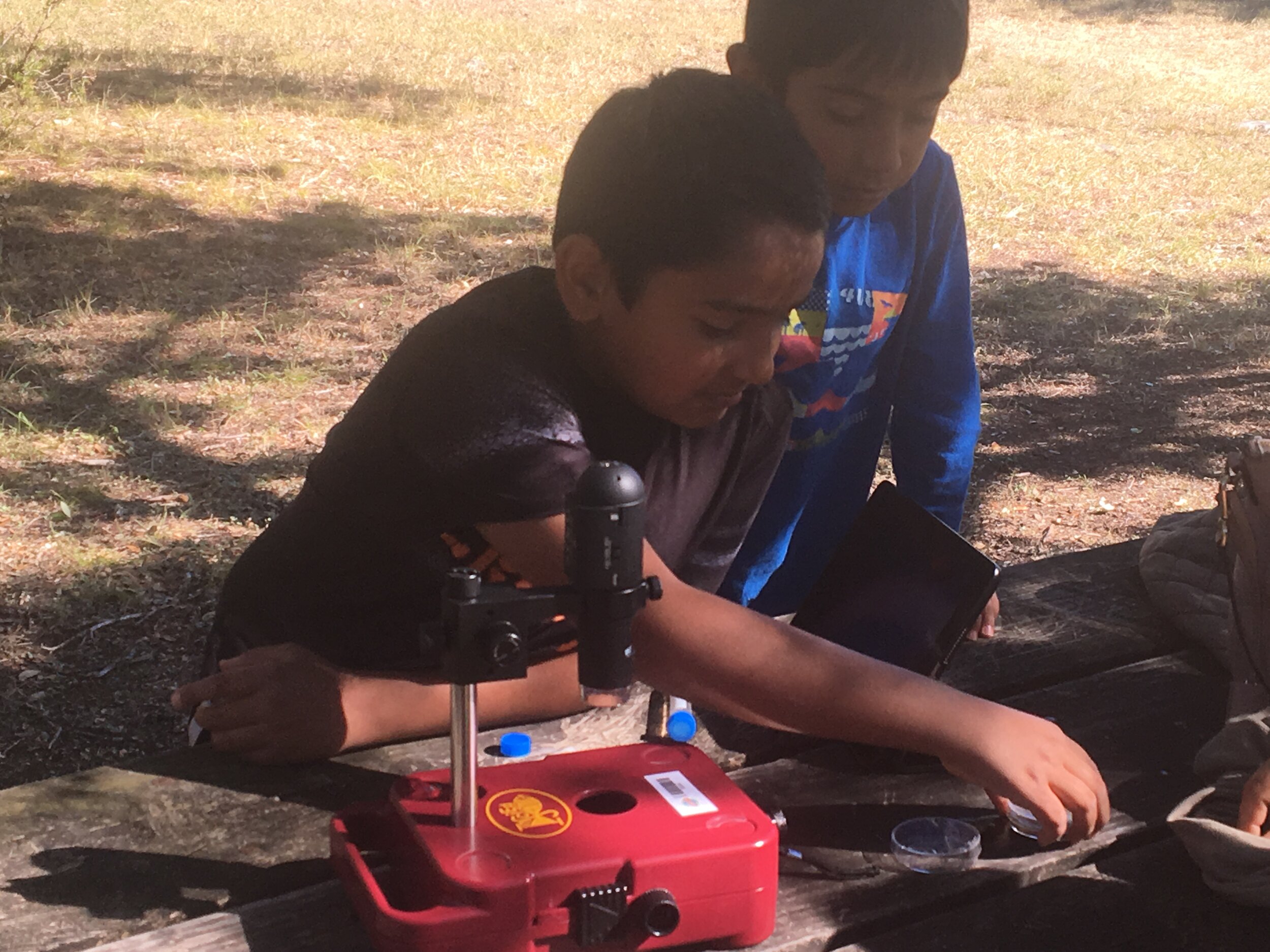
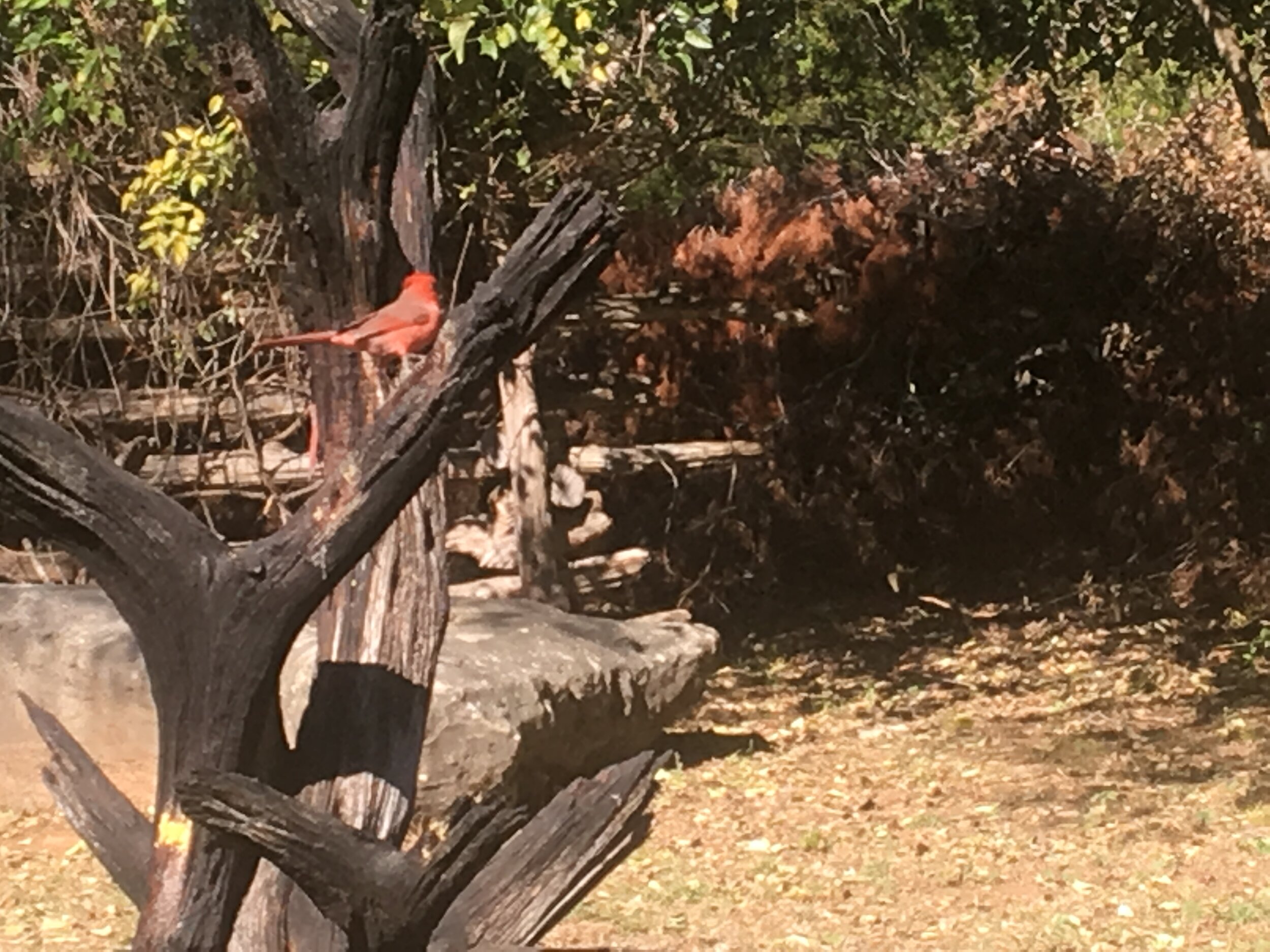
Dozens of nature lovers joined us on October 26 for the free Science Outside family workshop at Pedernales Falls State Park. We had a wonderful day of hiking, spotting wildlife and even fossils. (Missed the event? The State Park has some fun resources for a future visit.) 

science_outside_logo.jpg

This was the culminating event for our year-long Science Outside program, presented in partnership with Texas Parks and Wildlife. In spring 2019, 4th-7th graders from Blanco and Burnet counties joined us for the Science Outside Club. Kids conducted science activities and experiments in nature, using technology toolkits they received for free. A series of special events amplified the club sessions, including a week-long STEM Career Immersion camp, an overnight stay at Bamberger Ranch for bat watching and stargazing, and field trips to local state parks. 

Families got in on the Science Outside fun through two all-day workshops. Here’s what participants at the October 26 event had to say:

The microscope kits were amazing! Thank you for having the binoculars available to use
– Mary

[We had] fun collecting specimens, looking at fossils, walking & listening for birds
– Beckie

Great learning experience and family bonding time
– Jeanne

A fun event…connecting family among themselves, plus connecting with other families
– Abbey

When we say “fun for the whole family,” we mean it: the day’s youngest participant was under 6 and the oldest was over 60! The Science Mill is designed for all ages, too. Little ones will love the Young Explorers area for ages 0-3; bigger kids and kids at heart will have a blast with hands-on exhibits indoors and out, including live animals, gardens and immersive art installations. Bring your whole crew to see us soon and make memories at the Mill. 

SNEAK PREVIEW: Science Outside will return to the Science Mill in summer 2020, with two weeks of camp sessions! For your chance to join, watch www.sciencemill.org this winter or email info@sciencemill.org for future details. 

2019 STEM Toy Gift Guide

Welcome to the Science Mill’s STEM Toy Gift Guide for 2019! STEM is all about asking “How…,” “Why…” and “What if…?,” so these gifts guarantee to spark curiosity and stoke creativity. Everything featured here (and much more) can be purchased at the Mill’s Science Store, which has the largest selection of science toys, kits and books in the Hill Country. All store proceeds support STEM programming for tomorrow’s science leaders — so give a gift that gives back!

STGG_logo.jpg

Makey Makey GO

Makey Makey can turn almost anything into a computer keyboard: bananas, Play-doh, even people! (It’s the secret behind the Science Mill’s banana piano.) The object just needs to conduct electricity, allowing you to create a simple circuit. Makey-Makey GO is the pocket-sized, single-connector USB version for inventors on the go.

Why Diane picked it: “It’s so much fun to create circuits with Makey Makey. No programming knowledge needed — kids pick up the principles of circuitry as they play and experiment. For extra inspiration, there are lots of great Makey-Makey projects shared online.” Suggested age: 6+

Motorized Robot Hand

Bring a robot hand to life! The kit includes all the parts to build an articulated robotic hand. Compose a rhythm, then program the hand to tap out the beat. Explore anatomy, build engineering skills and get creative with programming.

Why Sherri picked it: “A great gift for kids who wonder how things work (like the Science Mill’s Colossal Robotic Hand), because they get to do every step of the process.” Suggested age: 8+

Grow Your Own Crystal Nightlight

Create a captivating, color-changing crystal nightlight. Use alum powder to grow your own crystal structures; the kit explains the chemical processes involved. Then learn how to wire the base using a circuit with color-changing LEDs. Put the crystals on display and get glowing!

Why Bonnie and Cheyanne picked it: “This toy is a chemistry experiment and an engineering tool kit all in one. It introduces kids to multiple fields of STEM learning.” “The end product is so colorful; it reminds me of the Science Mill’s Fractalarium.”  Suggested age: 8+ (with adult supervision)

Academy Books Series

Step into different STEM careers (Architect, Engineer, Scientist, Coder, and more) with the interactive books in the Academy series. Each book includes how-to sections, activities based on real-world challenges and playful extras, such as stickers, posters and games. 

Why Bradley and Mary picked it:  “These books are simple but informative and interactive. I would have much preferred Architect Academy to my textbook in college. Probably would have been more helpful as well!” “Scientist Academy covers a lot: it shows you how to make a pendulum, and it talks about chemistry, biology, forensic science, geology, space and fossils.”  Suggested age: 7+

Hatchin’ Grow Turtle

Place your “turtle egg” in water to watch the foam turtle hatch and grow. (The ideal solution when your kid wants to take home one of the Science Mill’s baby tortoises!)

Why Portia picked it: “Growing up, I loved sea monkeys: growing the little creatures, seeing their different stages of life and taking care of them. The Hatchin’ Grow Turtle is a nice first step for kids who aren’t quite ready for a real pet. It’s a mini life science lesson.” Suggested age: 5+

Experimental Greenhouse Kit and See-Thru Garden View

Nurture observation and problem-solving skills essential to STEM with these botany kits. Watch seeds sprout and roots spread thanks to the See-Thru Garden’s clear walls. Or make a living laboratory with the Experimental Greenhouse Kit: it comes with tools and an activity book with a variety of experiments, including a DIY automatic watering system.

Why Holly and Aubry picked it: “I love to garden and it's always fun to watch things grow before your eyes!” “The Aquaponics Greenhouse is one of my favorite places at the Science Mill. An interest in nature can be an entry point to STEM for many kids.” Suggested age: 5+

Synth Kit


See — and hear — how circuits and sound work together with the Synth Kit. Build three different synthesizers with unique sounds, or remix parts for new combinations; everything is designed to be rebuilt again and again, helping kids home in on the role each part plays in the circuit.  Experiment with pitch, frequency and volume as you make your own electronic music.

Why Joel picked it: “If you like to tinker around, take things apart and put them back together, this gift is for you! Suggested age: 13+

Spiral Art Set


A classic artmaking toy that’s also mathematics in disguise. Create cool and complex geometric patterns by experimenting with the spinning discs. What happens when you try a new shape or change where you place your pencil? Everything packs inside the slim kit for art on the go.

Why Alexis picked it: “This is a miniature version of our Wondergraph exhibit. It’s a memorable experience that allows people of all ages to be creative and enjoy unique art anywhere.” Suggested age: 6+

Kids First Biology Lab with Microscope

Reveal cell structures and invisible organisms with a real microscope. The Biology Lab includes premade microscope slides, plus tools and guides for making your own. How is the cat’s fur different than your hair? What’s living in a drop of lake water? See the world with new eyes under 750x magnification! (For tweens, check out the precision TKx400i Dual-LED Microscope.)

Why Wendy picked it: “My favorite toy as a kid was a microscope with pre-made slides and a slide making kit. Kids are fascinated by the microscope views of zebrafish embryos in our BioLab, and this is a wonderful way to build on that curiosity at home.” Suggested age: 8+


Happy Atoms Set

“Atoms are the building blocks of life”: The Happy Atoms set lets kids play with that idea and learn by building. Make atoms and molecules using magnetic connectors that represent bonds. Scan what you build with a smartphone or tablet camera, and use the Happy Atoms app to explore that molecule in depth (similar to the Science Mill’s Chemical Reactions table).

Why Amber picked it: “As a kid, I loved science experiments that incorporated kitchen chemistry: volcanoes made with baking soda and vinegar, alka seltzer rockets, etc. Chemistry felt like a struggle in high school, but became my favorite thing to teach to 6th and 8th graders.” Suggested age: 10+

For Kids at Heart

The Science Store has gifts for the grown-ups on your list, too. Hailey’s top pick is the heat-changing mug: fill it with hot coffee to reveal how caffeine interacts with your brain. Emilee suggests the bee notebooks to add bit of nature to any desk. Browse the store for more, including scarves, puzzles, bags and books. (But don’t be surprised when the adults have just as much fun with the kids’ toys above!)

For Kids of All Ages

Need a gift for the kid who has everything? Something you know they won’t outgrow? Or want to avoid all the wrapping and skip straight to the memory-making and fun? Treat the whole family to a Science Mill membership or day passes! Pre-sale tickets are also available now for Snow Day 2020.


Buy Admission Tickets