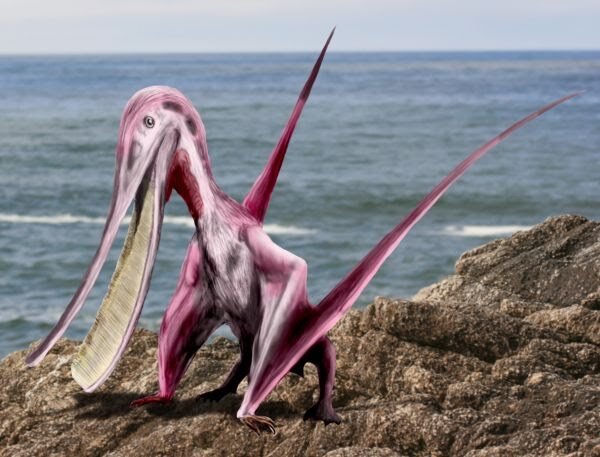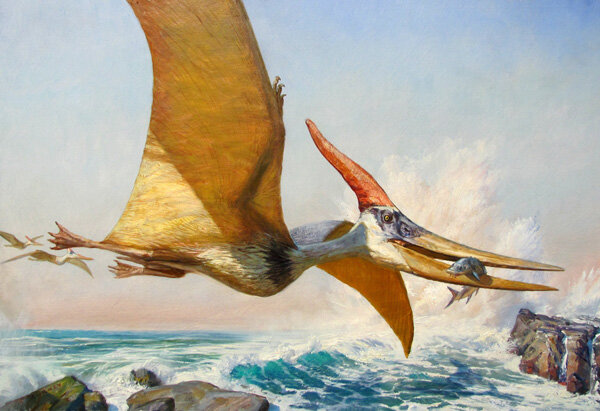
Is a pterosaur a dinosaur?

Do you have a favorite dinosaur? Celebrate it on May 18—International Dinosaur Day! (In fact, dinos are so big, they get two holidays: June 1 is International Dinosaur Day, too.)

Do you also have a favorite pterosaur? If you’re thinking, “What’s a pterosaur?” or “Isn’t that a dinosaur?”, read on! This is Part 1 of a two-part feature on pterosaurs, some of the weirdest, coolest creatures to ever fly. At the end of this post, you’ll find a DIY activity to make your own pterosaur!

Flocks of pterosaurs will (virtually) take to the sky this summer in Jurassic Flight 4D, the Science Mill’s new 4D virtual reality experience that lets you fly as a pterosaur through a world of dinosaurs. Join us Saturday, May 29 for Jurassic Experience, a day of dino-themed activities and the exhibit’s grand opening.
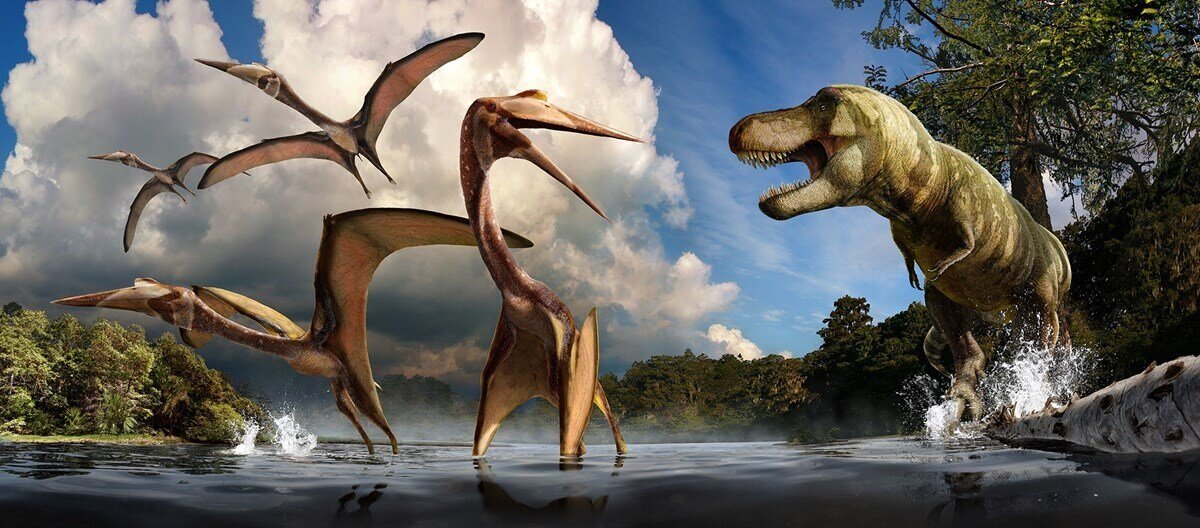
(artists: Julius Csotonyi and Alexandra Lefort, via National Park Service/ Big Bend National Park)

(artists: Julius Csotonyi and Alexandra Lefort, via National Park Service/ Big Bend National Park)

What’s a pterosaur?

Pterosaurs (the “p” is silent) were flying reptiles that lived 228 to 65 million years ago. They were the world’s first flying vertebrates, reaching new heights millions of years before modern birds and bats. Pterosaurs didn’t just leap or glide between heights, the way some reptiles do today. They were true fliers who could create lift by flapping their wings—what scientists call “powered flight.” (But there’s debate about how they flew; more on that in Part 2!)

“Pterosaur” isn’t one kind of animal: it’s actually a whole bunch of related species. The general name we use comes from Pterosauria, the scientific order that groups together these flying reptiles. For comparison, another order is Primates, which groups together apes, lemurs, lorises, tarsiers, monkeys and humans. 

Are pterosaurs a kind of dinosaur?

Nope, pterosaurs are NOT dinosaurs. They are cousins, who share a common ancestor but evolved into distinct groups. That might seem confusing: pterosaurs lived at the same time as dinosaurs and, well, don’t they look like dinosaurs?!

Scientific classifications go more than skin deep; they’re based in a careful study of anatomy that helps scientists better understand and organize both living and extinct creatures. Part of what separates dinosaurs from pterosaurs are their hip and arm bones. All dinosaurs have a hole in their hip socket and a crest on their upper arm bone; all pterosaurs do not. This video with paleontologist Danny Barta helps explain.

What did pterosaurs look like?

Pterosaur species came in every size, “from that of a sparrow to a Cessna plane with a wingspan of 35 feet,” describes Sankar Chatterjee, a paleontologist at Texas Tech University. Kepodactylus, the pterosaur you’ll fly as in Jurassic Flight 4D, had a wingspan around 8 feet.
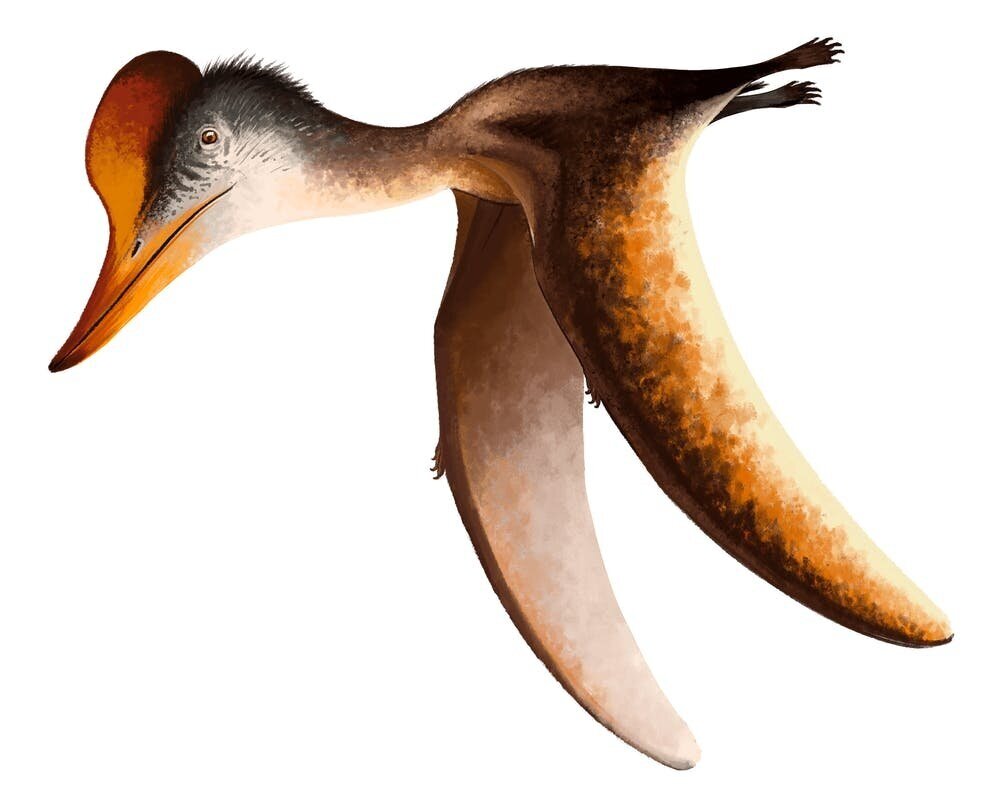
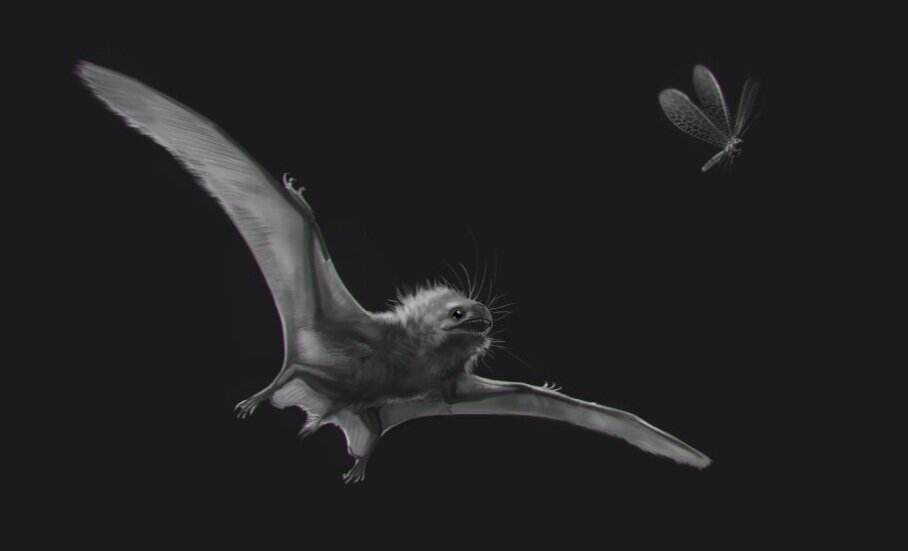
Pterosaurs share some very strange anatomical features. “They evolved some of the most extreme adaptations of any animal,” says paleontologist Michael B. Habib.
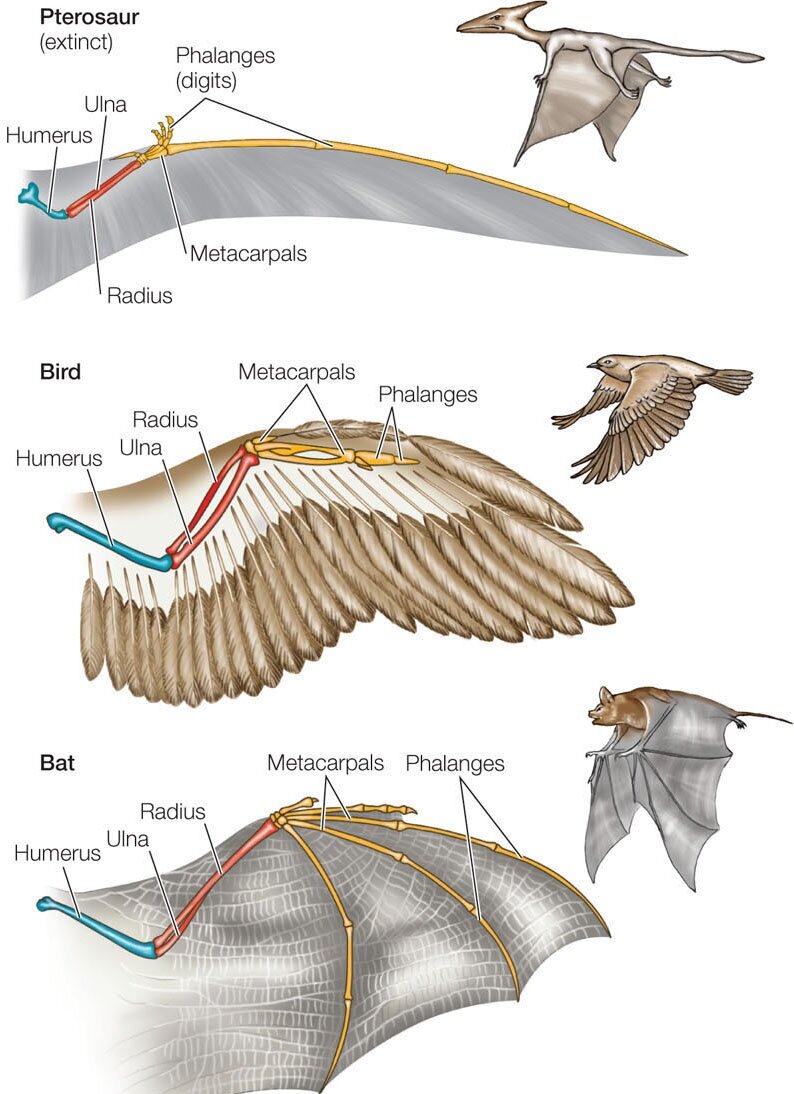
(source: MacMillan Learning)

(source: MacMillan Learning)

  • Looooong “wing fingers”: Unlike birds or bats, pterosaur wings ran along the sides of their bodies and were held up by a super-long fourth digit—the equivalent of our ring fingers. (Pterodactylus, one of the most famous pterosaurs, is actually named for this feature: ptero = wing and dactyl = finger.)

  • Shape-shifting wings: Sandwiched inside their wing membranes were layers of blood vessels, muscles and actinofibrils—chord-like fibers that made the membrane rigid yet flexible. One theory is that the muscles and fibers may have allowed pterosaurs to change the shape of their wings in flight.

  • Feathery fur?: Pterosaurs’ bodies were covered in pycnofibers—scientists aren’t sure if this fuzz was more like fur, feathers (think: baby chick) or hair. The covering probably helped pterosaurs control their body temperature.
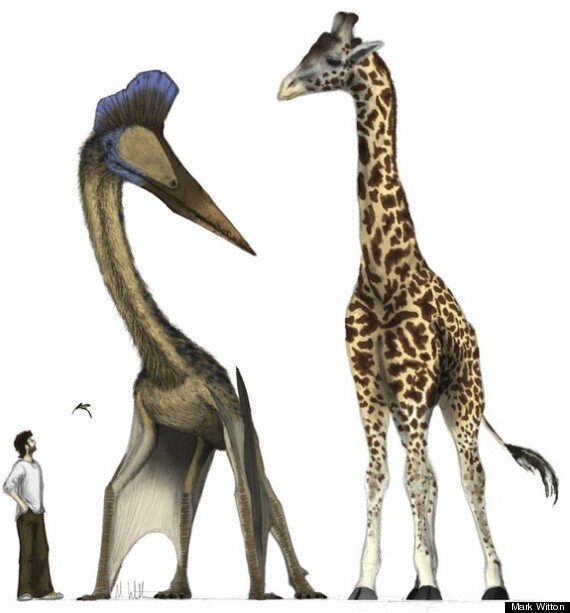
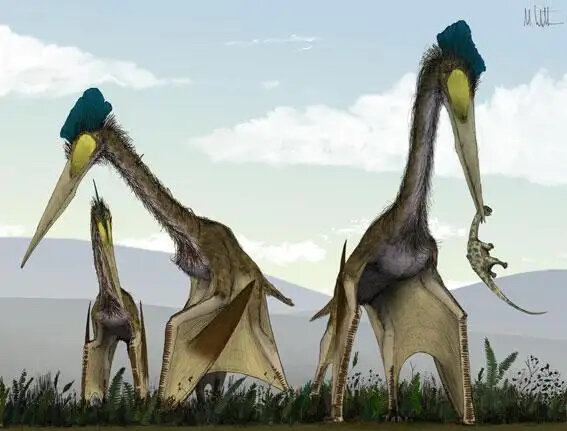
How would you measure up against Quetzalcoatlus? (artist: Mark Whitton)

How would you measure up against Quetzalcoatlus? (artist: Mark Whitton)

  • Crazy crests: Many pterosaur species had crests on their heads. Some crests were fleshy, some bony and others had a membrane “sail.” Crests might have helped regulate heat or balanced out long jaws. Most likely, they served to attract a mate. Scientists think some crests were brightly colored for extra flair!

  • Long necks + BIG heads: Pterosaurs had oddly proportioned bodies with big heads. Some species’ skulls and necks were well over half their body length. Mega-sized Quetzalcoatlus, found in Texas, had a head and neck that made up 75% of its length, with jaws twice the length of a T.rex’s!

How did an animal the size of a giraffe, with an enormous head, manage to fly? ...Or did it? Find out in Part 2!

TRY IT AT HOME OR SCHOOL

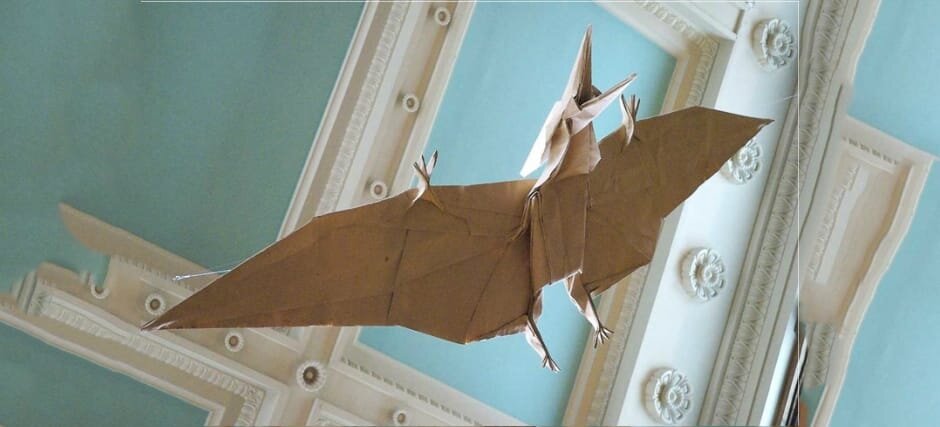
Fold an origami pterosaur
Make a paper pterosaur that shows off some of their extreme adaptations: big heads with long jaws, crests and, of course, those amazing wings. You’ll need a square piece of paper to get started. Click the links below to download instructions.

12-step pterosaur (designed by Nick Robinson)

25-step pterosaur (designed by Fernando Gilgado Gomez)

CAREER CONNECTION:
“The cool thing about origami is that it is a very mathematical art...You can do things with pure art, you can do things with pure math, but if you put them together, you get far more satisfying results than either one alone.” - Robert Lang, physicist and origami artist 

MORE TO EXPLORE
Learn how Robert Lang used artistry and computer programming to design a life-size origami Pteranodon for the Redpath Museum in Montreal!
13 ways to help butterflies and bees

butterfly bonanza girl.jpg

April 22 is Earth Day! To celebrate our planet’s amazing pollinators, we’ve put together a list of 13 ways you can help butterflies and bees. For more ideas, visit our blog post “Make Your Yard a Pollinator Pit Stop” for beginner-friendly plant guides and citizen science projects.

Join the Science Mill’s Butterfly Bonanza (+ Bats & Bees) on Saturday, April 24 from 10am-2pm for up-close encounters with pollinators and all-ages activities.

13 ways to help butterflies and bees:

bee.jpg
monarch+at+science+mill.jpg

(Visit the Science Mill’s Butterfly Garden to see these beautiful blooms and many others!)

Make Your Yard a Pollinator Pit Stop With Butterfly- and Bee-Friendly Plants

If you’re feeling that spring itch to explore outdoors, know that you’re not alone: pollinators are all a-buzz (or a-flap?) too! You’ll spot butterflies, bees and other insects—even bats, if you’re lucky—as they visit spring blooms, spreading pollen as they go to help plants form new seeds.

April is Citizen Science Month, so let’s look at ways we can support the butterflies and bees that make our world more vibrant, diverse and delicious. We’ll be celebrating pollinators (and Earth Day) at our annual Butterfly Bonanza on April 24th

Help monarchs on the move

Around the time Texans store away their warm coats, monarch butterflies stir from their winter retreat in Mexico and prepare to migrate north. By early April, they’ve arrived in Texas, ready to lay their eggs. Those eggs will hatch and continue north as adults, laying their own eggs along the way in an amazing multi-generational relay race that spans from Canada to Mexico.

Tracking their journey are citizen scientists—everyday folks gathering data to support scientific research—who share their sightings, count butterflies and map the location of milkweed plants where monarchs lay their eggs. Unfortunately, this year’s reports show the current monarch population is down 26% from 2019. Climate change and loss of wild habitat are major factors.

To help monarchs and other butterflies, you can create a homegrown pit stop with butterfly-friendly plants. “Supporting butterflies requires both nectar plants and host plants,” explained Kirk Alston, a horticultural specialist at The Natural Gardener. “Begin with nectar plants, as they are colorful and easy to grow. With the host plants—where eggs hatch and caterpillars feast—plan to install more than you might think: the little angels will eat your plants to the ground! They will eventually re-grow, but it takes some time, and you’ll need plenty to support the caterpillars’ journey to their future life. Milkweed is a great host plant for monarchs and queen butterflies; Dutchman’s Pipevine is a great for pipevine swallowtails.”

plant_id_1.jpg

The Science Mill’s butterfly garden guide shows some of the best plants for central Texas and how much light they need, so you can find what works for your yard. Ideally, Kirk notes, a garden should have blooms in each season; this supports more pollinators and adds a colorful element while other plants move through their life cycles. “I love gardens that are a mix of annuals, perennials, natives and exotics, plus flowering trees and shrubs,” said Kirk. “While our nursery specializes in plants native to Texas and we are big advocates for their use, we also rely on highly adaptive plants. For instance, Tropical Milkweed (Asclepias curassavica) is native to the Caribbean, but is our prime attractor of monarchs when laying their eggs. It grows very well in Central Texas and our garden would not be complete without it.”

Meet the native bees of Texas

In addition to being a monarch haven, Texas is home to a remarkable variety of bees: over 800 species—about one-fourth of North America’s bee diversity—have been identified here.

As pollinators, bees support an estimated one in three bites of our food. We tend to think of honey bees, brought to North America from Europe in the 1500-1600s, as the “queen bees” of pollination. But native bees (species naturally found here) can be two to three times more effective at pollinating crops, like alfalfa, tomatoes and watermelon. Some have coevolved with plants to become pollination “specialists,” such as blueberry bees, squash bees and orchard bees. Our beloved bluebonnets and other Texas wildflowers rely on them, too.

Unfortunately, declining numbers is something native bees have in common with honey bees. You may have heard about the Colony Collapse Disorder that has decimated honey bees. Threats to wild bees are more diverse, but pesticides, loss of habitat and limited diet, which lead to weakened immune systems, are a big part of the problem.

plant_id_2 (1).jpg

Adding bee-friendly plants to your yard is a great way to help. To get started, Kirk has suggested a mix of plants to provide bees with blooms across the seasons (see graphic). You can also create spaces for native bees to nest. Don’t worry, your yard won’t be swarmed. Unlike honey bees’ communal hives, almost all native bees are solitary: about 70% of native Texas bees nest in the ground, while others nest inside stems, wood or rocky crevices. And if a honey bee hive is too close for comfort, don’t call an exterminator: bring in a bee removal specialist to safely relocate them instead.

RESOURCE: Photo guides to help you ID native Texas pollinators

VIDEO: See a hive rescue in action (leave this to the professionals!)

Think like a Robot Inventor

Robot Mania returns to the Science Mill this March! To celebrate, we’ve rounded up great “robots for beginners” resources and paired them with a look at how an Austin company is creating a new kind of helper robot.

Photo: Diligent Robotics

Photo: Diligent Robotics

Meet Moxi, a “cobot”—or collaborative robot—ready to help on hospitals’ front lines. Moxi’s co-creators, Dr. Andrea Thomaz and Dr. Vivian Chu, are experts in artificial intelligence (AI) and machine learning. Before starting their company, Diligent Robotics, they asked what fields might benefit most from AI-equipped robots. "We put our passion for pairing technology with human need to the test," Dr. Thomaz explained. "We realized that health care workers were the people we wanted to work alongside and help the most." They quickly found a need among hospital nurses.

In addition to seeing patients, hospital nurses run samples to labs, drop off prescriptions, get supplies and cover countless other simple but time-consuming tasks. In fact, these tasks can take up 30% of a nurse’s shift! What if a robot could give nurses back some of that time to focus on patients?

Thomaz, Chu and their team shadowed nurses on the job to better understand their needs. They created story boards to visualize the flow of work. They brainstormed and “bodystormed,” physically role playing to imagine different situations their design would need to address.

They identified four key traits for the robot: Teammate, Dexterous, Autonomous and Proactive. Unlike an automated warehouse or assembly line, a hospital is a public, changing environment full of social interactions. Their robot needs to fit in. It also needs to handle supplies and tools designed for human hands. And to really save staff time, it needs to complete jobs without prompting—but also know when to ask for help.

Co-creators Chu and Thomaz test a prototype of Moxi’s robotic arm. Photo: Diligent Robotics

Co-creators Chu and Thomaz test a prototype of Moxi’s robotic arm. Photo: Diligent Robotics

Moxi started with a prototype arm and gripper hand. A rolling base added mobility. Sensors and cameras, linked to AI technology, allow Moxi to sense its environment in real time, recognize objects and take action. Moxi can hear the rumble of a supply cart, see it coming and know to move out of the way. Like a human, senses help Moxi learn: when a nurse introduces a new object, Moxi files away data on color, weight and size to help make a positive ID next time.

Moxi’s outer appearance is designed to be friendly and expressive. It’s practically a rolling emoji, with digital eyes that can become hearts. The eyes “look” in the direction Moxi is heading, to help people anticipate its path.

Programmed with floor plans and daily schedules, Moxie began making trial rounds at four Texas hospitals in 2018-19. Hundreds of working hours and thousands of tasks have helped the team find new ways to improve their design. Some they couldn’t have imagined, like the request from Dell Children’s Hospital to make Moxi fart! (The nurses were right: kids love it.)

Moxi is just one kind of medical robot. Other robots assist doctors in delicate surgeries. Robotic exoskeletons may soon help patients learn to walk. In the future, tiny nanobots could even deliver targeted treatments inside out bodies. COVID-19 has created new needs for robots. Around the world, teams are developing supply delivery robots, disinfecting robots, health screening robots and robotic arms that let staff safely operate equipment from outside patients’ rooms. Telehealth robots to help doctors “visit” homes are in the works.

Moxi now runs 22/7 for months at a time, often delivering PPE and COVID test kits. While a pandemic probably isn’t a scenario Thomaz and Chu imagined, their vision of collaborative robots helping humans is becoming a reality.

MORE TO EXPLORE

Robotics at the Science Mill:

  • Robot Mania – March 8-19, 2021
    Battle with bots, code a human robot & try your (bionic) hand at Robo Operation

  • Colossal Robotic Hand
    See how we built a 30-foot robot hand, plus activities & videos on the Explorer Zone

  • Critter Bots
    Bring robotic animals to life by coding action commands like scratch, bellow & rattle!

At-home robotic activities & resources (including no-tech options):

Robotics kits from our Science Store:

Other robotics kits we recommend for kids:
● LEGO Boost & Mindstorms ● Botley the Coding Robot ● Home Science Tools Bristlebots ● MakeBlock mBot Robot ● ROBOTIS KidsLab products

For more advanced projects, check out Arduino microcontrollers—they provide “brains” for robots (including our Colossal Robotic Hand) & have lots of cool tutorials.

Robotics clubs & competitions:

Several popular youth organizations also offer robotics programs:

Buy Admission Tickets